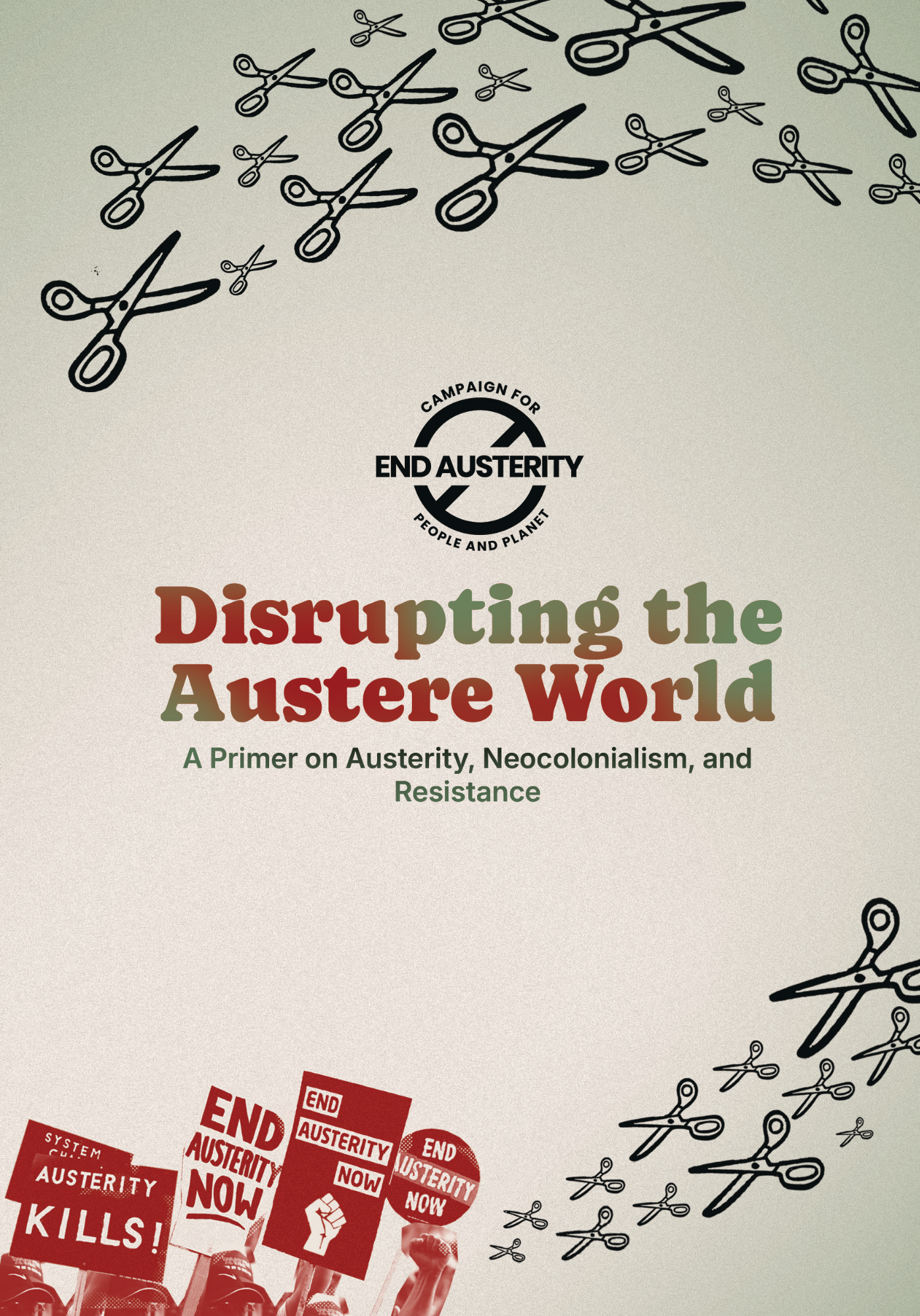
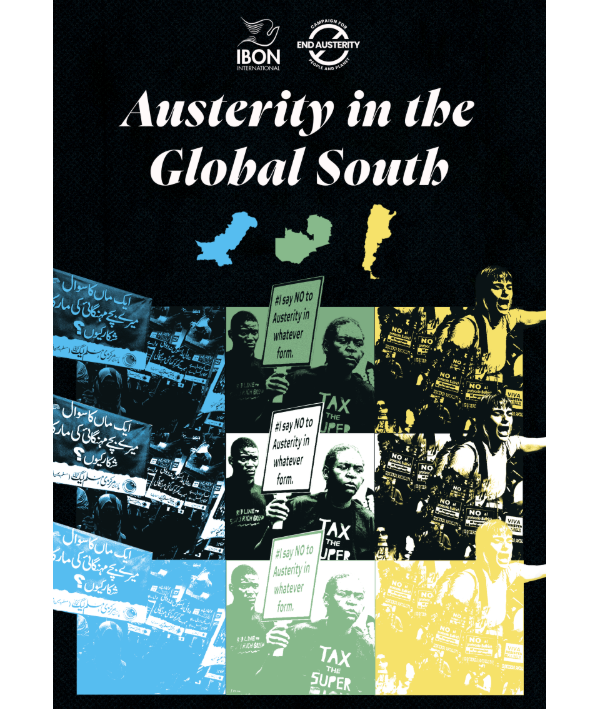
Austerity is belt-tightening of the poor majority so that the rich few can continue to rake in super-profits. In the context of the International Monetary Fund (IMF), austerity is the definitive fiscal policy it prescribes to supposedly resolve governments’ debt and budget problems by restricting public spending, conceding public infrastructure and services to privatisation, and wringing consumption taxes from wage-earners. It is a political tool—specifically an imperialist tool led by the US and its allies, as they dominate shares and voting power in the IMF—to further elite and monopoly capitalist interests at the expense of the world’s toiling majority of workers, peasants, women and Indigenous Peoples. These interests include those of international finance institutions, transnational corporations and Northern governments, with the acquiescence of local ruling elites and their governments in the global South.
This book looks into three Southern countries from Asia, Africa and Latin America: Pakistan, Zambia and Argentina. Contributing organizations Roots for Equity, ActionAid Zambia, and the General Confederation of Labour of Argentina examined their respective national economic and political contexts that “rationalised” the imposition of austerity; the international dynamics and their countries historical relationship with the IMF and other global North powers; impacts on working peoples; and people’s alternatives and resistance.
![Disrupting the Austere World [SPANISH]](https://iboninternational.org/wp-content/uploads/2025/09/Disrupting-the-Austere-World-SPANISH.png)
![Disrupting the Austere World [FRENCH]](https://iboninternational.org/wp-content/uploads/2025/09/Disrupting-the-Austere-World-FRENCH.png)