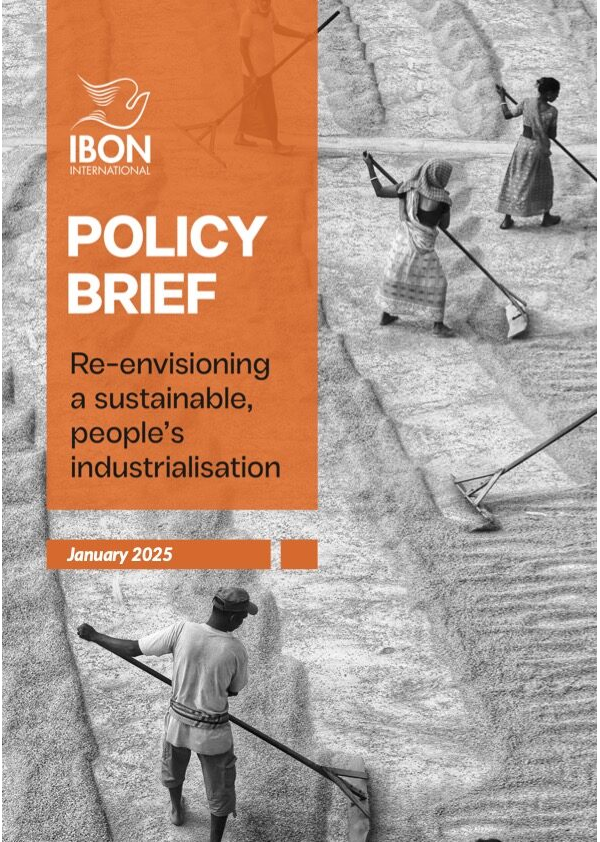
There is no one-size-fits-all industrial policy, and thus always requires adaptation to national conditions. Today, industrial policy should recognise the systemic roots of current multiple crises, to which its priorities should respond. It also needs to affirm the foundational character of such a policy agenda as a transformation away from the system of corporate-led production and volatile markets under which the global South economies are still subsumed.
Industrial policy requires a redefinition of current roles of the public and private sector, on the basis of responding to peoples’ needs. This re-definition of the public and private roles means a) breaking from colonial and neocolonial investment patterns, where private investment merely serves resource extraction, infrastructure for commodity exports, and financial markets tied to speculative capital; as well as b) (re)building domestic economies after decades of maldevelopment on the basis of democratic ownership and reconnecting “finance” with the “real economy,” with domestic private sector’s contributions oriented to support domestic dynamism.


![Disrupting the Austere World [SPANISH]](https://iboninternational.org/wp-content/uploads/2025/09/Disrupting-the-Austere-World-SPANISH.png)
![Disrupting the Austere World [FRENCH]](https://iboninternational.org/wp-content/uploads/2025/09/Disrupting-the-Austere-World-FRENCH.png)